

That’s So Cincinnati
With a recipe for Cincinnati chili–flavored goetta
This is the end of 513 Week, a three-part series about Cincinnati food. Monday’s piece covered chain pizza. Wednesday’s covered ribs. To finish, I’m taking a bigger-picture look at the city’s food traditions, capped by a Cincinnati-on-Cincinnati recipe that sounds like a dare but tastes like it should already be a butcher shop staple. See you next year, with a Grippo’s seasoning how-to, if I can crack it by then.
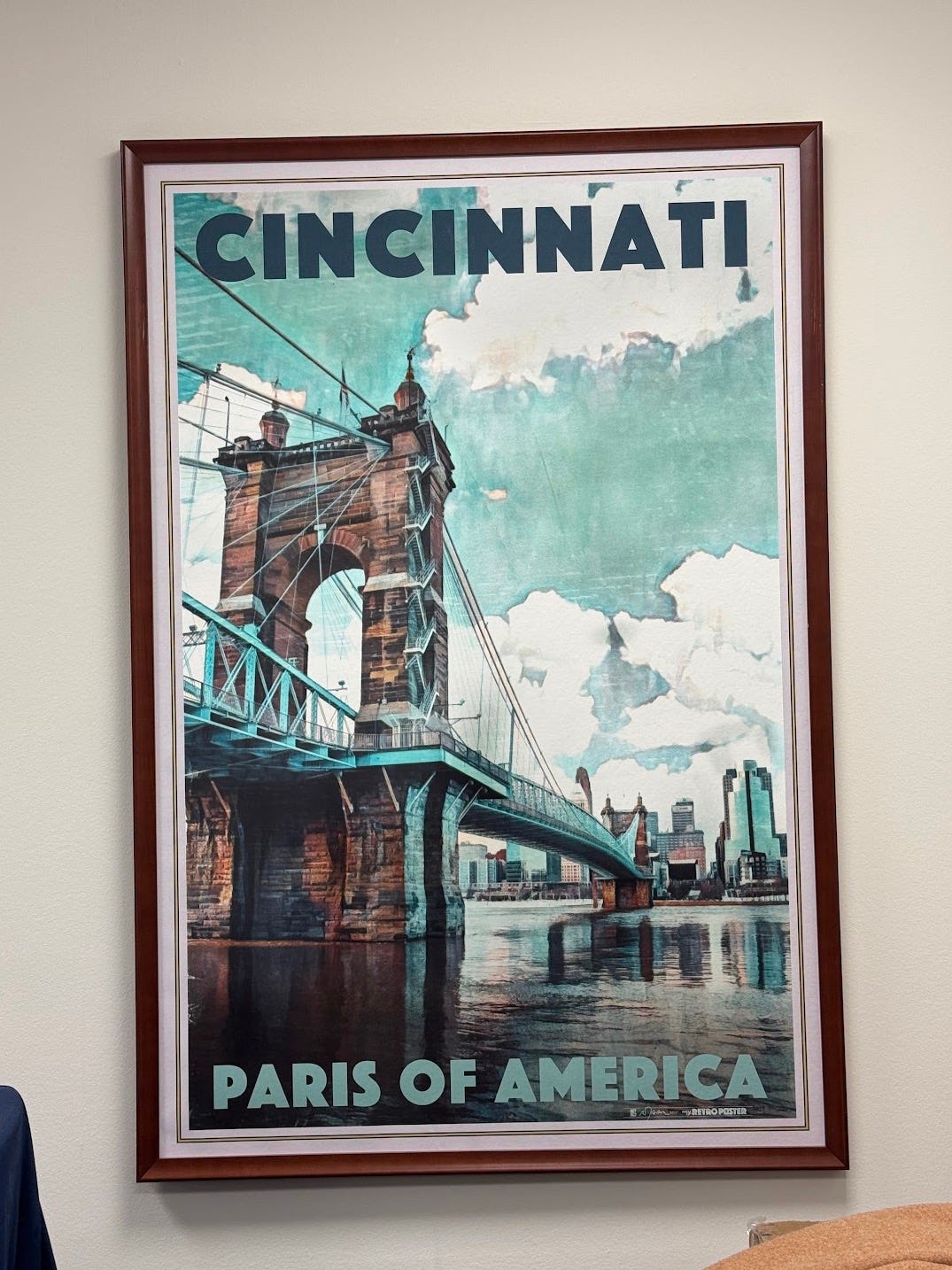
Cincinnati has its own culinary language, with proper nouns like Skyline, LaRosa’s, and Montgomery Inn and generic terms like goetta, mettwurst, and mock turtle soup. Most locals speak at least enough to get by.
I’ve spent the majority of my adult life outside my hometown, so I know it’s not the only place with institutions and inside jokes. The difference is commitment to the bit.
In Kansas City, where I live now, plenty of people have made barbecue their whole personality. I wonder if even they eat burnt ends the way many Cincinnatians (including me) eat three-ways and coneys. “I would say that a lot of Cincinnatians go out for chili once a week or more,” says Maija Zummo, the former editor-in-chief of the alt-weekly CityBeat and a senior manager at Visit Cincy. “It’s part of the culture, and we live the culture. We feel that Cincinnati pride all the time.”
One of the Cincinnati Enquirer’s flagship podcasts is called “That’s So Cincinnati,” and anyone from the Queen City knows what that means—and that it isn’t a dig. (“If you named a podcast, ‘That’s So Des Moines,’ I’d assume you were making fun of us,” my Iowa native mother-in-law says.)
When I was growing up in the Ohio suburbs, there were major national brands that I only knew from TV or the movies, because my whole life was so Cincinnati. I always wondered what a Slurpee tasted like. Instead of 7-Eleven, my friends and I got snacks at United Dairy Farmers, a regional chain of convenience stores with built-in ice cream parlors. My parents’ freezer was too crowded with UDF and Graeter’s pints to accommodate Ben & Jerry’s. My go-to fast food burger wasn’t a Big Mac, but a tartar-sauced Big Boy from Frisch’s. Our family went to the nearest Skyline, one of 130-some mostly regional locations, pretty much every Friday.1
Today, at least three different businesses—Cincy Favorites, Cincy Direct, and Cincinnati Specialties—exist just to ship canned chili, barbecue chips, ice cream, and other tastes of place to people like me. I’ll bet the only other Midwestern city that exports as much food culture is Chicago.
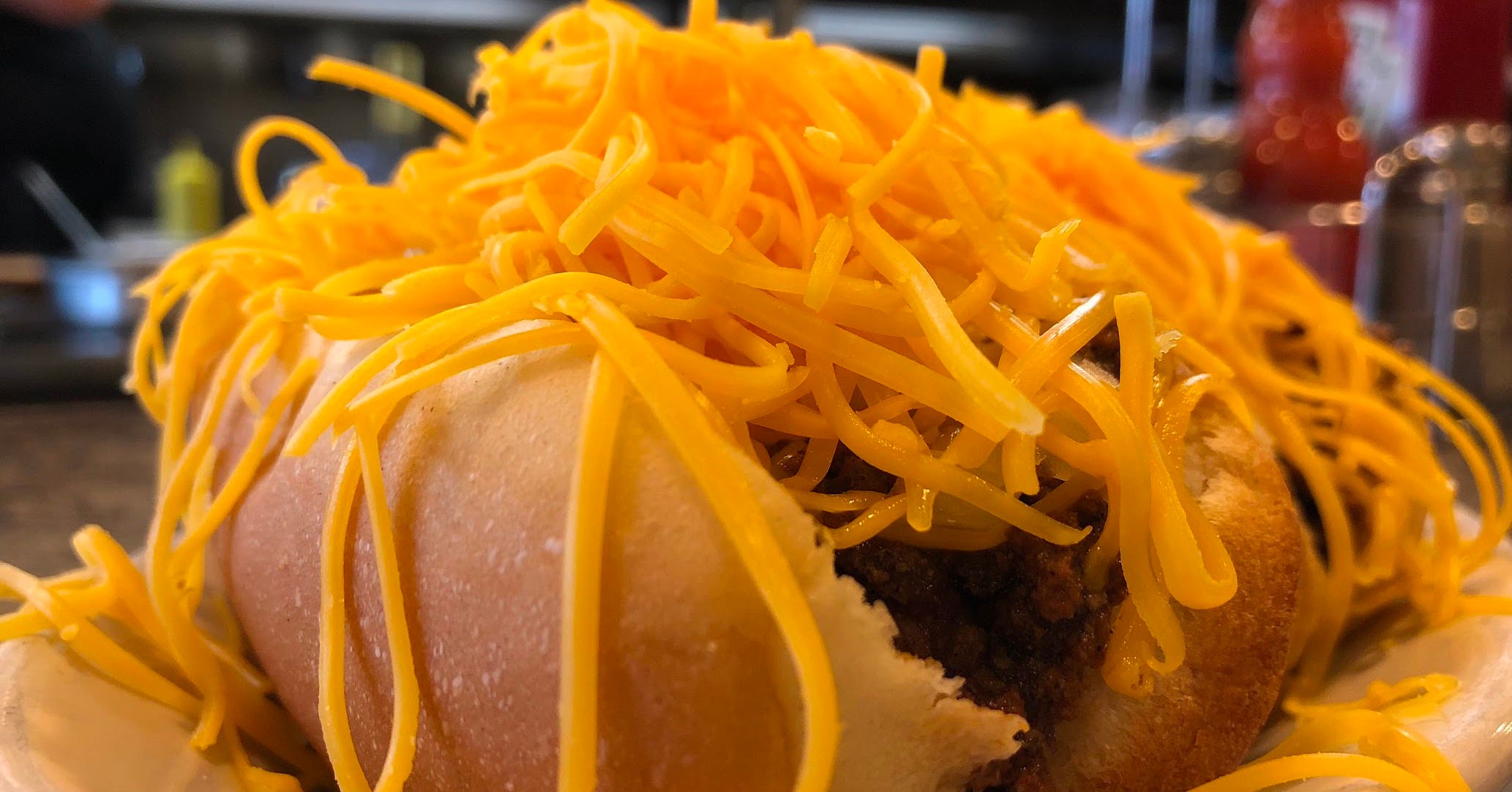
There’s more behind the city’s appetite for local flavor than effective marketing, Greg Hand says. To explain what he calls the “Cincinnati personality,” the local writer and historian, known for his Cincinnati Curiosities blog, points to a moment of cultural whiplash at the beginning of the twentieth century.
Unlike most of its Midwestern neighbors, Cincinnati was one of the 10 largest cities in America for almost a century. Then, it dropped off—permanently—in 1910. “That seemed to have a profound psychological impact,” Hand says. “People started looking around and asking, ‘Why aren’t we there?’ Just 20 years before, people were still predicting Cincinnati could become the largest city in the country.”
The city still punches well above its weight. With a metro population of only two million or so, it’s home to eight Fortune 500 companies, including the nation’s largest grocery retailer, Kroger, and global consumer goods titan Procter & Gamble, both of which date back to Cincinnati’s top-10 era and have grown exponentially since. Older Cincinnatians are proud that downtown had more Mobil five-star restaurants than New York in the 1970s. Their kids and grandkids talk about its impressive representation in the James Beard Awards over the past few years.
But for generations, Cincinnati has been a mostly under-the-radar heartland burg—a “medium place,” to quote a now-famous line from the TV show The Good Place—with a bigger city’s civic pride and a veteran prizefighter’s instinct to protect its gut. “We still feel like a big city,” Hand says. “And we’re very defensive when we think people are trying to take us or our food down a notch.”
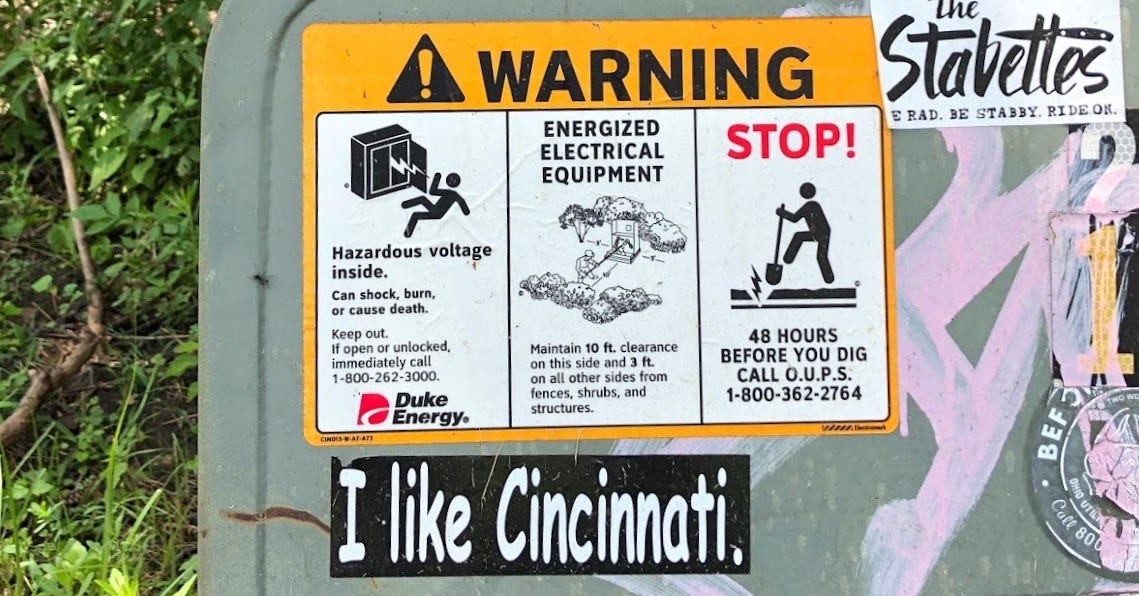
The way Hand sees it, Cincinnati’s Old World heritage plays into that. “You can’t ignore the fact that in many ways, the personality of this city is very German,” Hand says, because of a massive influx of German immigrants in the mid-1800s. “It’s very steadfast, it’s very proud, and it’s very stubborn.”
Whatever the reason, the onetime sixth-largest city in America still supports more than 200 chili parlors, makes mock turtle soup when almost everyone else on earth has left it behind, and snacks on feathery, sweet-and-spicy Grippo’s barbecue chips, when it would be easier (but not more delicious) to switch to Lay’s.
“Cincinnati has these booming food businesses because we all buy from them,” Zummo says. “It’s not because people from out of town are coming to eat Graeter’s Ice Cream. Jeni’s, from Columbus, has a Dolly Parton collaboration ice cream. Graeter’s does not have a Dolly Parton ice cream. Graeter’s has everyone in Cincinnati eating Graeter’s.”
For more on all this, I recommend longtime Enquirer food writer Polly Campbell’s 2020 book Cincinnati Food: A History of Queen City Cuisine, the definitive account of more than two centuries of local foodways.
CINCINNATI CHILI GOETTA
Makes three 9-by-5-inch or 8-½-by-4-½-inch loaves
Long before I started obsessing over LaRosa’s pizza or Montgomery Inn ribs, I was making batch after batch of Cincinnati chili in an attempt to recreate the Skyline version.
I finally got there with my 2023 Serious Eats recipe, which has a surprising secret ingredient: active dry yeast. I told the story in the recipe’s headnote.
For this piece, I wanted to try creating a recipe that was too Cincinnati, testing a hypothesis that there’s no such thing. So, I put the seasoning from my Cincy chili recipe in my Serious Eats recipe for goetta, the city’s signature breakfast meat.
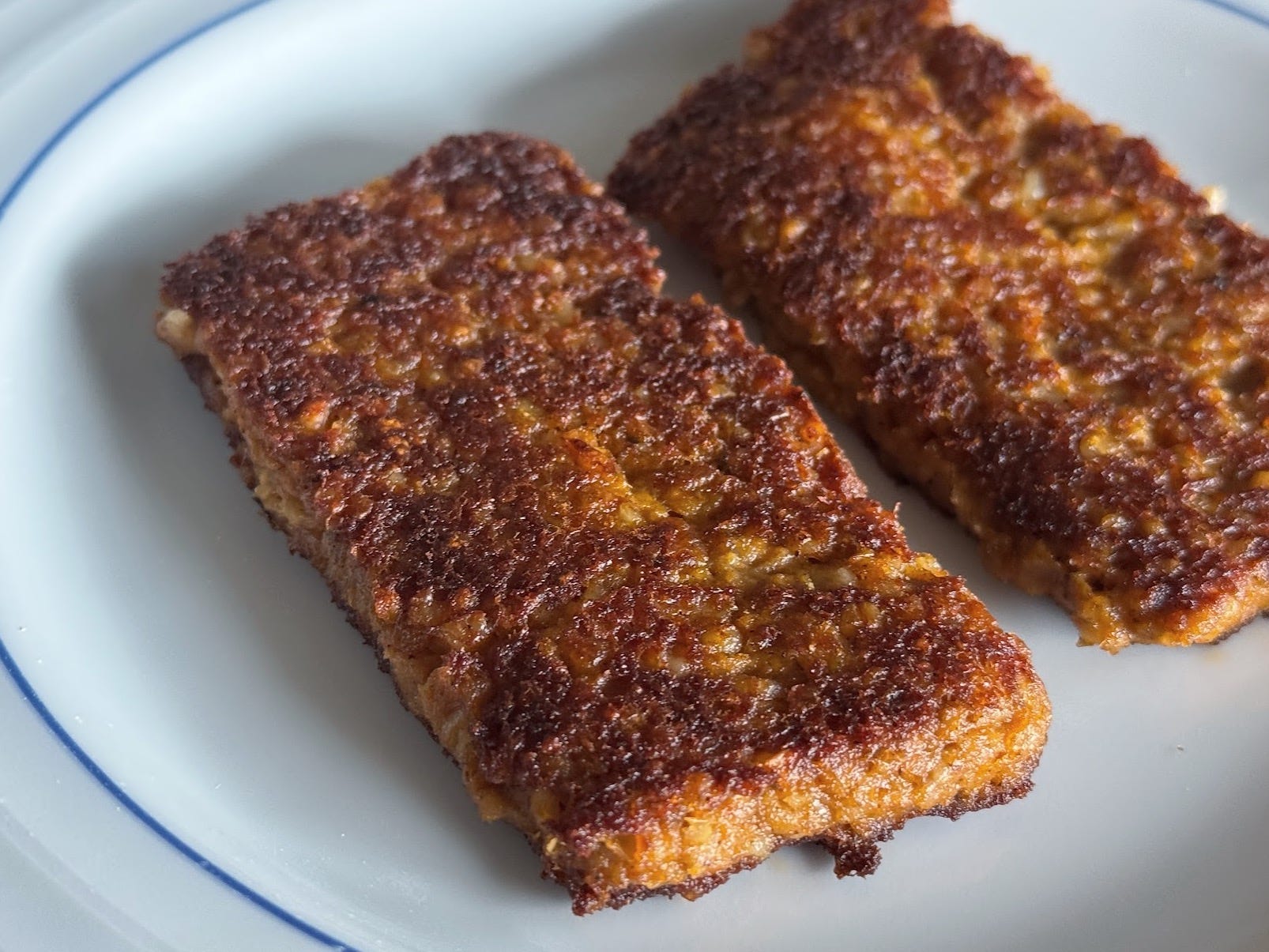
From the same German tradition as Pennsylvania scrapple and North Carolina livermush, goetta is made by cooking ground or minced pork (once offal and off-cuts, now often just pork shoulder) with pinhead or steel-cut oats until the mixture thickens, then letting it set into a loaf. When you crisp the slices in a frying pan, you get a browned, crunchy crust and a pudding-like interior.
I made a few changes to bridge the two recipes, including one that may stand out to some readers: As much as I hated to get rid of the yeast, which was the key unlock in my Skyline-style chili recipe, it added a distractingly bready flavor when paired with nutty pinhead oats. I replaced yeast with MSG, another glutamate booster. If you don’t have MSG on your spice rack, I recommend you pick it up. It should be available at your local supermarket under the brand name Accent.
This take on goetta is so Cincinnati. And I think it’s delicious.
Ingredients
1 3-pound (1.36 kg) piece of bone-in pork shoulder, fat cap trimmed to a thickness of ½ inch
1 large onion (10 ounces; 284 g), roughly chopped
3 stalks celery (150 g), roughly chopped
6 cloves garlic, crushed
3 bay leaves
¼ cup (66 g) tomato paste
2 tablespoons (30 ml) red wine vinegar
1 tablespoon (15 ml) Worcestershire sauce
2 tablespoons (20 g) Diamond Crystal kosher salt (if using table salt, use half as much by volume or the same amount by weight)
2 tablespoons (15 g) chili powder
2 tablespoons (15 g) sweet paprika
1 teaspoon MSG
1 teaspoon ground allspice
1 teaspoon ground cinnamon
½ teaspoon ground cloves
1 teaspoon ground cumin
1 teaspoon dried oregano
1 teaspoon ground white pepper (you can substitute black pepper if necessary)
½ teaspoon cayenne pepper
½ teaspoon ground ginger
2½ cups (400 g) pinhead or steel-cut oats (do not substitute rolled oats or quick-cooking oats)
Neutral oil or bacon fat, for pan-frying slices
Preparation
Preheat the oven to 350℉ (177℃). Add pork, onion, celery, garlic, and bay leaves to a large pot or Dutch oven and cover with 10 cups (2.37 L) of water. Bring to a boil on the stovetop over high heat, then cover the pot, transfer to the oven, and cook until pork is falling off the bone, 2½–3 hours.
Using a spider skimmer or a large slotted spoon and tongs, carefully transfer pork, onion, celery, and garlic to a large bowl, shaking off as much broth as possible. Let meat cool slightly. Meanwhile, discard bay leaves. Using a fine-mesh strainer, strain and measure cooking liquid. Add water or discard broth as necessary to reach 8 cups, then return the liquid to the pot.
Using 2 forks, roughly shred meat, discarding any large pieces of fat or gristle.
Using a meat grinder or food processor, grind or chop pork, onion, and celery into small pieces, working in batches if necessary to ensure a consistent texture. It should be pebbly, like ground beef, not a paste.
Add tomato paste, vinegar, Worcestershire sauce, salt, MSG, and spices to the pot and whisk until completely blended. Add ground meat and vegetables, then oats. Bring to a boil over high heat. Transfer the pot to the oven and cook, uncovered, for 2 hours. Stir to prevent sticking and burning every 30 minutes for the first hour, then every 15 minutes for the second hour, taking care to scrape down the sides. By the end, the mixture should be so thick that it’s difficult to stir, and a divot left by the spoon doesn’t disappear.
Line three 9-by-5-inch or 8-½-by-4-½-inch loaf pans with parchment paper or lightly grease them. Fill each pan with goetta mixture (about 4 cups per pan), pressing it down as firmly as possible to remove any air pockets. Use a spatula to smooth the top.
Let the filled pans cool to room temperature, about 1 hour, then cover with an airtight lid or plastic wrap and refrigerate for at least 10 hours, allowing goetta to set completely.
To pan-fry and serve: Run a knife around the edges of the pan to loosen the meatloaf, then invert and remove goetta from the loaf pan and cut it into ¼-inch thick slices.
Add 1 tablespoon (15 ml) oil or bacon fat to a large skillet and heat over medium heat until shimmering. Add a few goetta slices, taking care not to crowd the pan for easy flipping. Lower heat to medium-low, press lightly on each slice with a spatula, and cook without moving until browned and crisped on one side, 5–7 minutes. For the crispiest goetta, drizzle a little more oil on top, then carefully flip and continue to cook until browned on the second side, 5–7 minutes. Serve.
Make ahead: This will make more goetta than the average family will want to eat in a week, so give a loaf (or two) away or freeze the extras, which is often part of the Cincinnati tradition. As long as they’re tightly wrapped or in an airtight container, the loaves will keep the refrigerator for up to 1 week. To freeze them, wrap loaves (my recommendation) or individual slices tightly in plastic wrap and foil or seal in freezer bags. They will keep for up to 3 months. Thaw them in the refrigerator before slicing, if necessary, and pan-frying.
In 2017, an inSight market report made headlines in Cincinnati for confirming what we already knew in our hearts: Skyline Chili had the most loyal customers of any sit-down restaurant in the United States. Frisch’s was third on the list.